Circular economy · Uganda · Est. 2024

Rooted in Alkebulan.
Built by communities.
Growing for Africa.

A social enterprise turning waste, land, and indigenous knowledge into dignified, sustainable livelihoods for vulnerable youth and women across Uganda.

Partner with us Learn more
Who we are

Restoring dignity.
Rebuilding livelihoods.
Regenerating our garden.

We sit at the intersection of clean energy, smart agriculture, and green construction — the three pillars Africa needs to flourish on its own terms. Headquartered in Matugga, Wakiso District, Uganda.

Founded 2024 · Registered social enterprise · Governed by community enterprise committees with minimum 40% women membership at every hub.

Our name carries our purpose. Kebulan derives from Alkebulan — the oldest recorded name for the African continent, used by ancient Moorish, Arabic, and indigenous scholars to mean "Mother of Mankind" or "Garden of Eden."

Cycle speaks to three things at once: the circular economy where waste becomes resource; the African cycle of community where we rise together; and the regenerative cycles of soil, water, seed, and harvest that indigenous African agriculture has always understood.

What we do

Three pillars. One circular system.

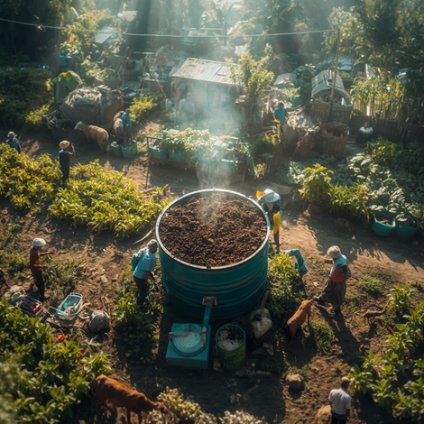
Every output becomes the next input. Organic waste feeds digesters. Digestate feeds soil. Bamboo builds homes. Solar powers irrigation. Nothing is wasted. Everything cycles.

Clean renewable energy

Tackling Uganda's energy crisis at both ends — clean cooking fuel and decentralised electricity — using locally fabricated, locally owned technologies.

  • Biogas & Bio-CNG cylinders
  • Solar PV & irrigation
  • Wind systems for Karamoja

Smart sustainable agriculture

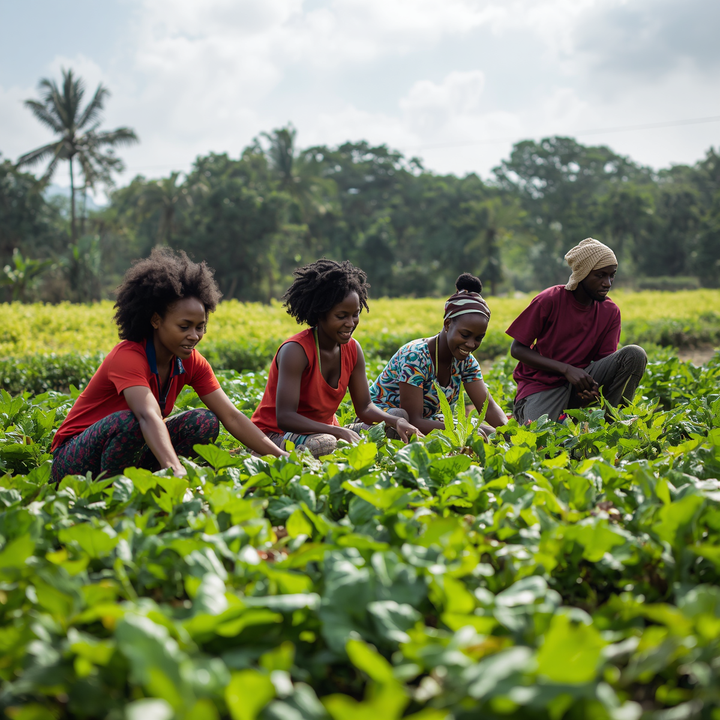
Indigenous knowledge meets circular techniques — restoring soil, raising yields, diversifying income, and building climate resilience for smallholder farmers.

  • Agroforestry & bamboo
  • Black Soldier Fly protein
  • Smart irrigation systems

Eco-friendly green construction

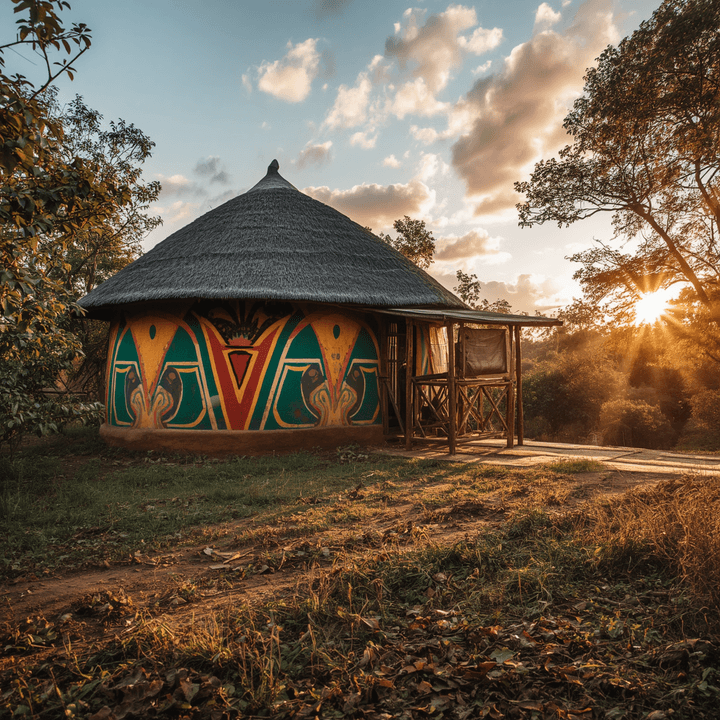
Affordable, dignified housing built from local soil, recycled plastic, and indigenous fibres — by local people, for local communities.

  • ISSB compressed soil blocks
  • Plastic-to-building boards
  • Passive solar design
Our 2030 targets

Impact at scale

0
youth & women trained by 2030
0
tCO₂e climate impact per year
0
demonstration hubs across Uganda
0
community enterprise groups
0
households on clean cooking fuel
0
% female direct beneficiaries
How we work

Five approaches. Training into thriving.

Poverty is a systems problem, not a knowledge problem. We address capital access, skills, peer accountability, coaching, and market connections — all at once.

01

Demonstration hubs

Real, operating enterprises — not classrooms — where trainees handle real feedstock, real customers, and real money. Our flagship hub is at Matugga, Wakiso District.

02

Group formations

We graduate groups of minimum five — each with a joint mobile money account, a constitution, and CBO registration. The single most powerful predictor of enterprise survival.

03

Seed grants & revolving funds

Graduating groups receive UGX 2–5 million to launch. As enterprises generate revenue, contributions build a revolving fund that re-grants to future cohorts.

04

Digital solutions

BioTrack Uganda maps waste and connects feedstock producers to buyers and carbon auditors in real time. MTN Mobile Money delivers instant farmer payments.

05

Advisory desk

We broker offtake agreements — connecting BSF groups to farms, ISSB groups to construction firms, biogas groups to cylinder buyers. Supply without demand is activity without livelihoods.

Flagship project

BioGas Uganda Initiative

In partnership with Fachverband Biogas e.V. (German Biogas Association) — Uganda's first vertically integrated biogas purification, compression, and Bio-CNG cylinder distribution enterprise. Reference: BGU/GBA/2025/001.

Building the cattle corridor's clean energy future

Starting in Mbarara and Kiruhura — Uganda's densest cattle zones — the initiative connects 200+ smallholder dairy farmers per hub to a hub-and-spoke feedstock network. Manure becomes Bio-CNG cylinders priced 15–20% below LPG, distributed through SACCO and agro-dealer networks. Carbon credits return revenue directly to farmers via mobile money.

2,000cylinders/month by Year 3
5,000+households on clean fuel
15,000tCO₂e/yr Gold Standard
150+direct jobs, 40% women
USD 765KYear 3 revenue
Where we work

Across Uganda's highest-need communities

From our Matugga hub through the cattle-keeping corridor, into Uganda's highest-poverty districts, and across refugee-hosting communities.

Cattle corridor

Mbarara, Kiruhura, Nakaseke — 14.2M head of cattle and Uganda's largest single biogas feedstock opportunity.

Karamoja sub-region

~66% poverty headcount — highest in Uganda. Smart irrigation, agroforestry, and solar WaSH for pastoralist communities.

Acholi & West Nile

Post-conflict and refugee-hosting communities. Uganda hosts 1.5M+ refugees. Integrated energy, water, and shelter programmes.

Eastern Uganda

Bukedi, Busoga, Lango — youth unemployment hubs where coffee and sugarcane waste become circular enterprise.

Partnerships

Part of a deliberate ecosystem

African-led and African-rooted partners alongside international expertise — all committed to dignity, circularity, and community ownership.

Fachverband Biogas e.V. FUSE Uganda Social Innovation Academy Makerere University Africa Circular Economy Network SNV African Biogas Partnership Davis & Shirtliff Wasteplus Limited Ecobrixs Rootical UNHCR Uganda GIZ / BMZ (pipeline) Green Climate Fund (pipeline)

Walk the cycle with us

Kebulan Cycle is at an inflection point. Our Matugga hub is established, founding partnerships are in place, and our flagship biogas project is ready for catalytic investment. 0% of funds go to overhead.

USD 1.5MTotal 3-year investment need (2026–2028)
USD 550KCatalytic first tranche — BioGas Uganda Initiative
60%Of every dollar goes directly into community programmes
0%Of grant funds used for overhead or founder salaries
Contact us — info@kebulancycle.org